
What the Hack: Essential Baking and Dessert Making Fundamentals Pt. 1
Heads Up! This page and some posts on this site contain affiliate links. This means if you click on a link and make a purchase, I may receive a commission, at no additional cost to you. These commissions help support my work and allow me to continue creating valuable content. I only recommend products and services I genuinely believe in.
You’ve seen it—baking hacks are everywhere. Swap this for that, microwave this for five seconds, use a mug, a banana, do 5 sun salutations and a pivot... we’ve all tried a few! And while some are impressive game-changers, others leave you with a lopsided dessert and a battered ego.
But here’s the thing: the best baking shortcuts do work because they’re rooted in solid baking science. Understanding the basics, like what eggs do in a mixture or why cold butter matters, gives you the power to spot which hacks are brilliant and which ones are just marshmallow fluff.
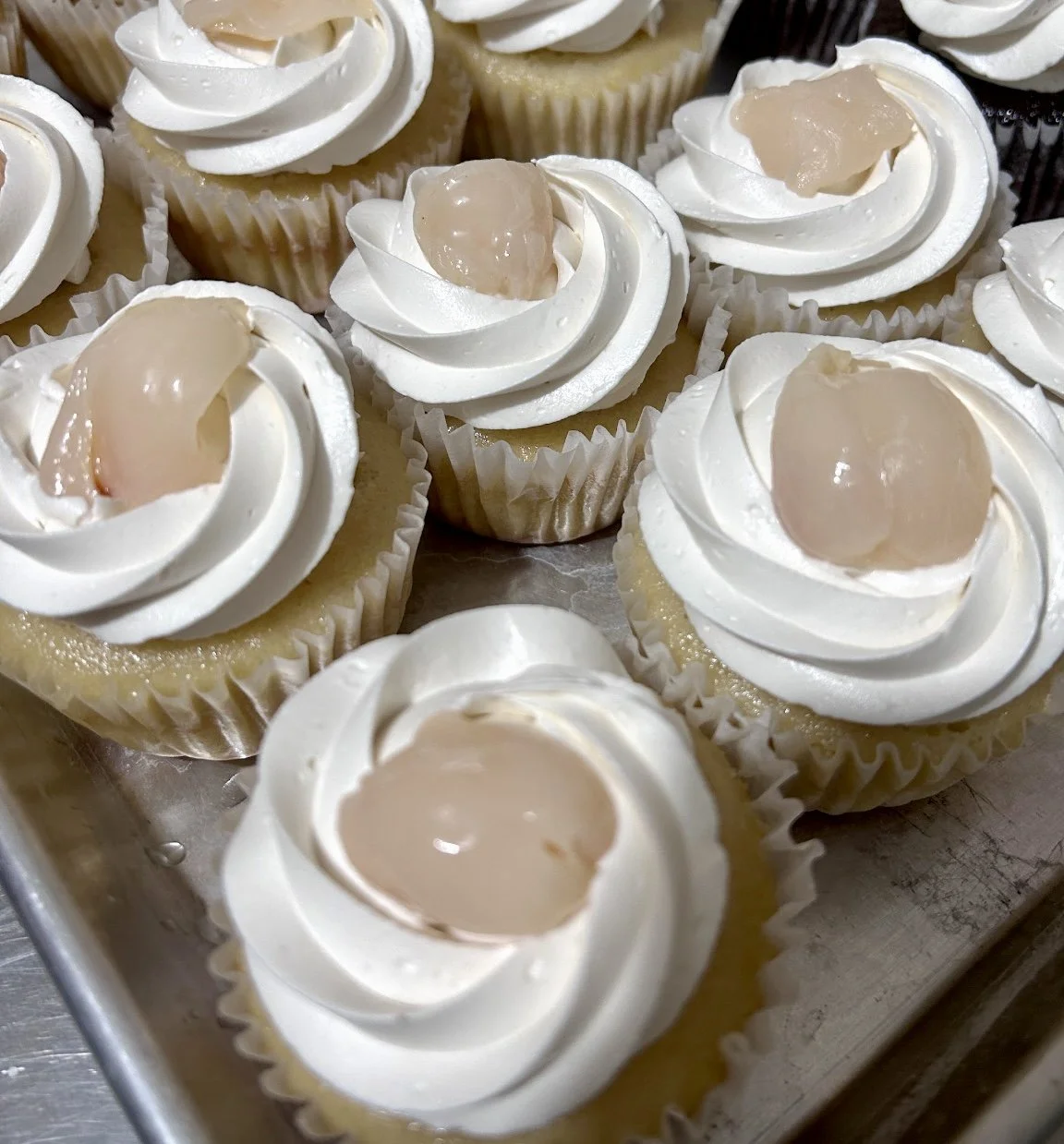
Lychee cupcakes
In this series, we’re dusting off the good old fundamentals and showing you how they’re the secret sauce behind every successful trick in the book. Whether you're a whisk-wielding newbie or a sugar slinging pro, it’s time to mix a little know-how into your shortcut stash.
Baking is both an art and a science, and the journey from mixing bowl to oven becomes smoother, and more enjoyable, with the right knowledge in your arsenal.
Let’s start it off with Measuring
Measurements are unequivocally fundamental to baking. This is where the magic starts and often, where a lot of people go wayward in the process. There are several types of measuring vessels and tools in the kitchen.
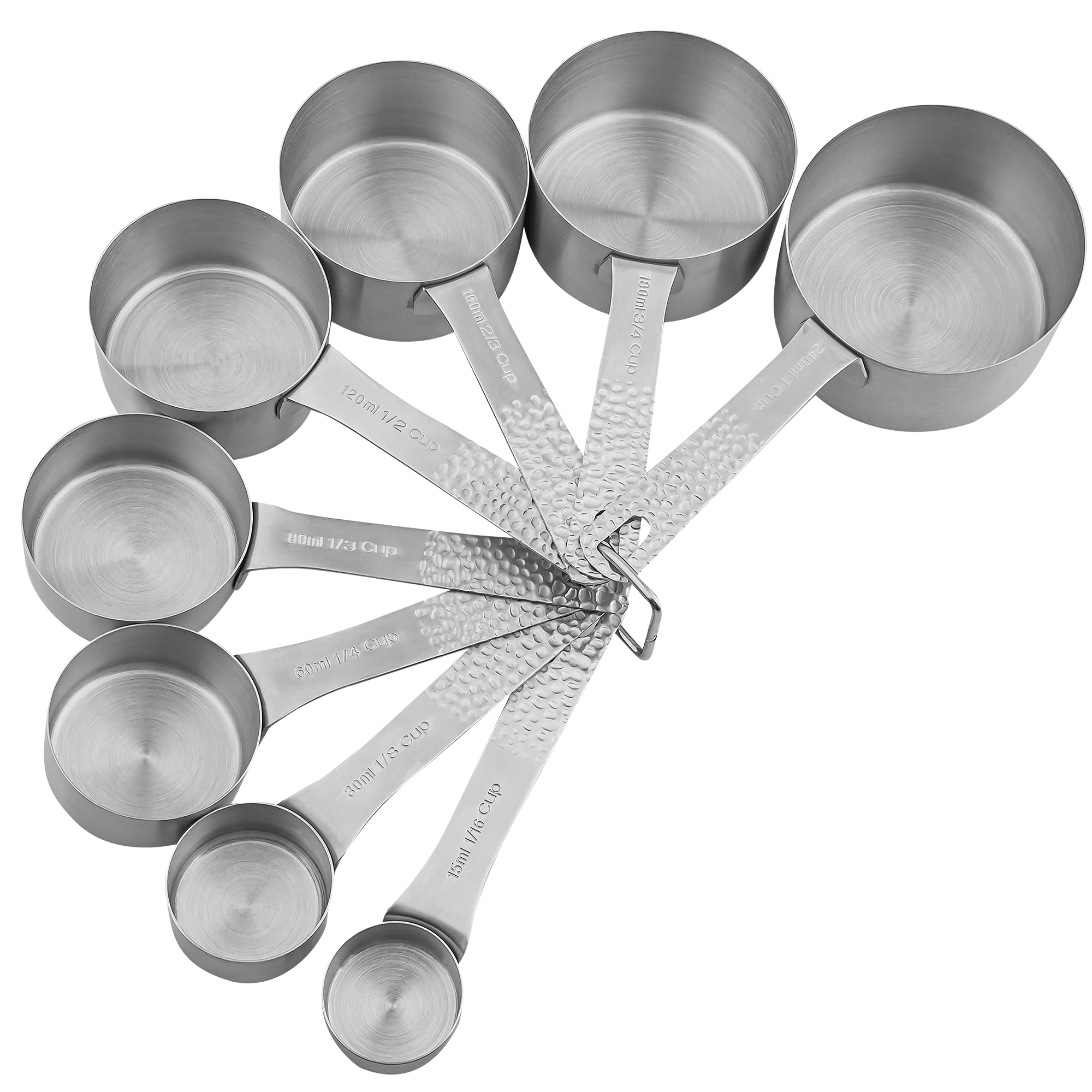
Affordable and durable.
Dry Measures: These are going to be your measuring cups that are used to measure basically anything that’s not liquid in quantities larger than a Tablespoon. Think flours, sugars, (solid) butter and shortening etc. They all have the same standard shape (a round bottomed shallow cup with a perpendicular protruding handle like a saucepot. They are most commonly found in plastic, stainless steel and lately, silicone. Let me just say right now that I absolutely despise plastic across all areas of my life and only use it when it is unavoidable. From a hygiene and durability perspective, my top pick when it comes to measuring cup material is stainless steel. Though I’m an avid anti-plastic warrior, my second choice is the plastic ones, though they can get scratched and stained easily, and that is just because I find that the flexibility of the silicone ones I’ve tried isn’t practical for all applications. This is a set I bought 3 years ago that’s still going strong. It also comes with measuring spoons
Liquid Measures: One of the most defining features of any liquid measuring vessel is that they will have a little spout on the rim to make pouring easier. It just makes sense as these are used for any fluids required for your recipe. They also tend to be deeper than dry measures.
They are widely available in plastic and silicone like dry measures, but my absolute favourite material for liquid measures is Borosilicate Glass. This material is widely used in science labs and for good reason. Borosilicate is incredibly durable, especially as it is way less sensitive to rapid temperature changes and doesn’t break as easily as regular glass. While Pyrex is a well known and loved brand name of borosilicate measuring vessels, the price for a set is surprisingly comparable to other, lesser known brands. One of the features I love most about them is that the markings do not rub off nor fade with use and I use them A LOT.
Spoons: Some measuring spoon sets will come with a double end, with the idea that the more elongated side is for liquids, but the truth is that any measuring spoon can be used for any consistency of ingredients. Since they are in smaller quantities, the shape and ergonomics don’t make a big difference. Of course, I recommend stainless steel ones.
Rulers & Rings: You might not think a ruler belongs in your baking drawer, but trust me—it makes all the difference between “Wow, you made that?” and Wow, YOU made that?!” Precision is everything in baking, and a good finish lies in the mundane details. A ruler helps you measure dough thickness, cut straight edges, and evenly size cake heights or fondant pieces. No more lopsided layers or mystery-sized pastries!
Now, rolling pin rings? Those colorful little lifesavers slide onto the ends of your rolling pin and basically do the measuring for you. They keep your dough or fondant rolled out to the exact thickness you want—whether it’s 1/4 inch for cookies or paper-thin for fondant. No more guessing. No more “oops-this-side’s-too-thick” disasters.
Ruled silicone pastry mats are another handy piece of equipment for measuring. They are just like a regular nonstick silicone baking mat with the addition of clearly marked measuring rings that help you to roll your dough or fondant to the desired diameter.
Together rulers, pastry mats and rolling pin rings are like your behind-the-scenes baking besties—keeping things smooth and even and Instagram-worthy with the flawless foundations needed for aesthetic finishes.
Kitchen scale: Many traditional and large-batch recipes will need to be weighed instead of measured with cups and spoons. This ensures the most accuracy and is best for recipes where the ratio of ingredients will greatly affect the end product. This is one tool I strongly suggest investing in, as an accurate and reliable scale is key to ensuring perfect results. My top affordable pick for whipping up perfectly rated desserts is the Escali Primo Digital Scale. It has been put to the test by the Serious Eats team and came out on top for accuracy and sensitivity when it comes on to general kitchen weighing. BONUS: It also comes in some really fun colours.
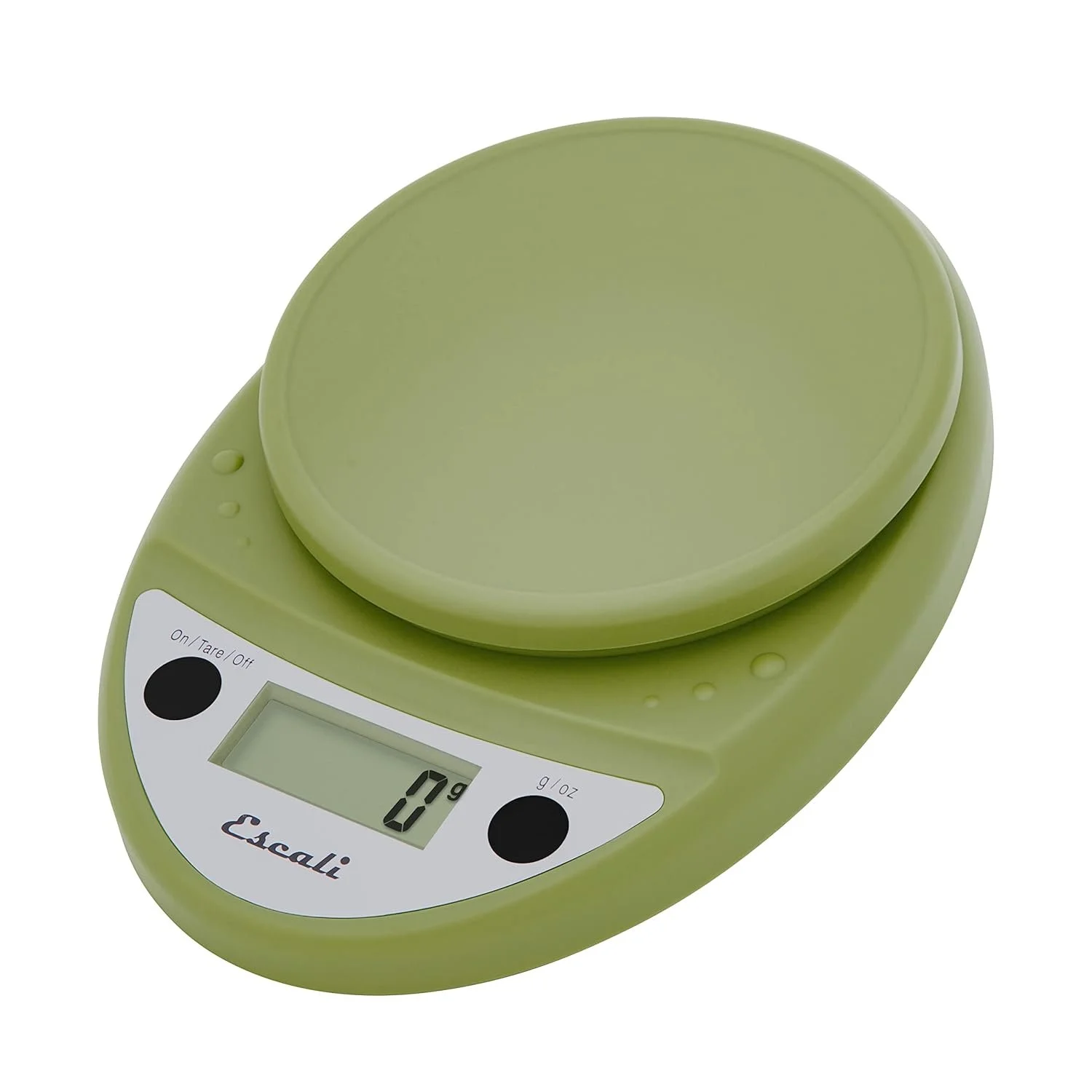
Comes in fun colours and is highly recommended for precise measuring and portion control.
Of course there are those times when some ingredients are really just about personal taste and preference, and we use words like “sprinkle,” “pinch,” “tups” and the like. For the most part though, sticking to measurements, especially weighing, has a significant impact on the quality of your end product and can mean the difference between taking a picture of your work just for documentation and having an entire photoshoot. (Yeah, it happens to me too).
So as you go forth into the world of all that is sweet and glorious, remember that an ounce of precision spares you from a pan of despair!
